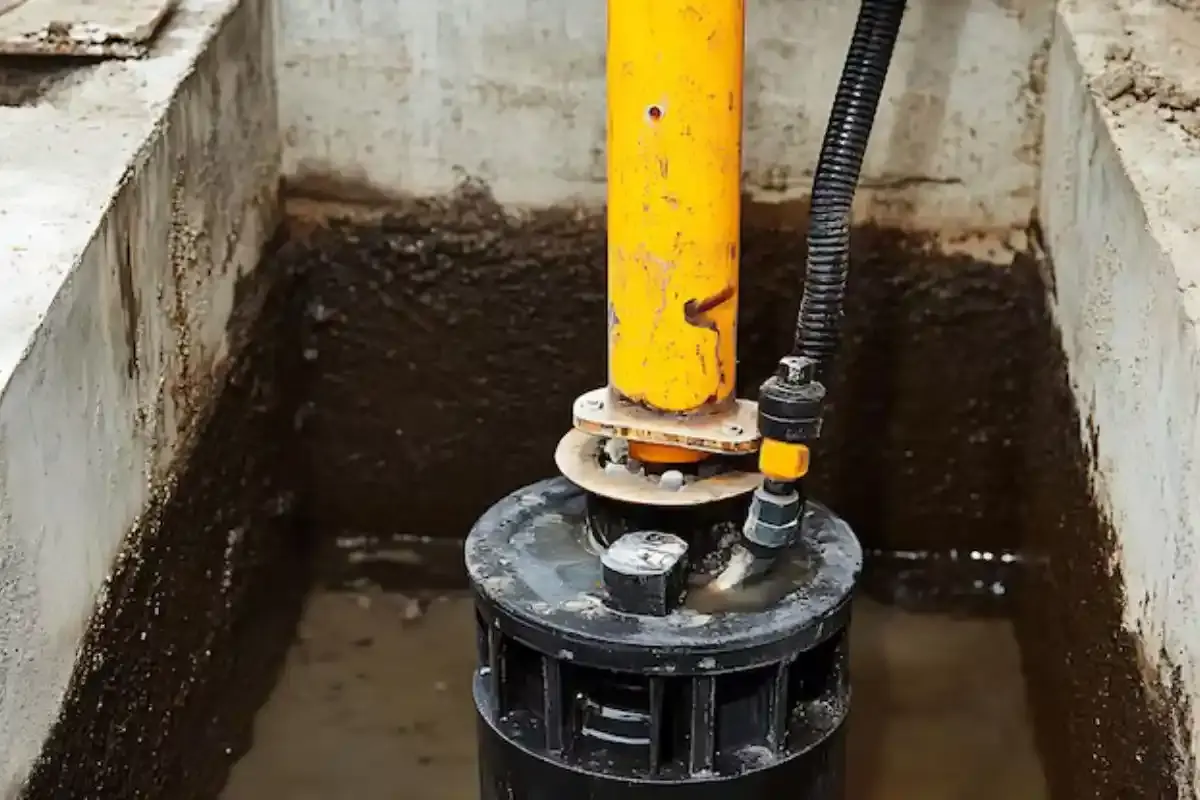
What a sump system does
A sump system collects water in a pit at the lowest part of the basement and pumps it away from the house. Water finds the pit through the soil, through a perimeter drain or from under the slab.
The system has four parts: the pit, the pump, the check valve and the discharge line. When any one is wrong, the system does not do its job. Planning the whole system is better than picking a pump.
The parts you are choosing
Each part has a job and a common way to go wrong.
| Part | Job | Common problem |
|---|---|---|
| Pit and liner | Collects water | Too small or not at the low point. |
| Pump | Moves water out | Wrong size or cheap float switch. |
| Check valve | Stops water flowing back | Missing or failing. |
| Discharge line | Carries water away | Frozen, blocked or too close to the house. |
| Backup | Keeps working in an outage | Dead battery. |
Sizing the pump and the pit
A pump needs to move more water than the basement receives in a wet period. A too-small pump runs constantly and wears out. A very large pump in a small pit short-cycles and wears out too.
We look at how fast the pit fills in a wet spell, the height the pump has to lift the water and the length of the discharge. The pit should be deep and wide enough that the pump does not turn on and off every few seconds.
Check flood risk for your address
Windham has the Willimantic, Natchaug and Shetucket rivers, and low areas can see high water in wet seasons. FEMA publishes flood maps at its Map Service Center that you can search by address to see whether your property sits in a mapped flood zone.
A sump pump helps with groundwater, not river flooding. If your home is in a mapped zone, talk to your insurer about flood coverage. Our basement waterproofing page explains how pumps fit with other fixes.
According to FEMA, its Map Service Center shows whether a property sits in a mapped flood zone.
Want it sized correctly?
Call and describe how the basement gets wet.
Where the water should go
The discharge line matters as much as the pump. Water should drain well away from the foundation and downhill, not onto a neighbor's property and not into a septic system or a sanitary sewer connection. A line that ends too close to the house simply recycles the water.
In this area, freezing is an issue. A discharge that freezes shut backs the pump up and can burn it out. We route the line with a pitch, use a freeze-resistant outlet where we can and tell you how to check it each winter.
Backup power and alarms
Storms that bring heavy rain also bring power outages. A battery backup pump or a water-powered backup keeps the pit emptying when the main pump cannot run. A high-water alarm warns you before the pit overflows.
Test the backup twice a year. Batteries age, and a backup that has not been tested is a hope, not a system. Our sump pump page explains the options in more detail.
Maintenance and signs it is time to replace
A sump pump is easy to forget until it fails. Test it twice a year and clean the intake screen. Look for rust, a worn cord or a noisy motor. A pump that runs constantly, even in dry weather, is working harder than it should.
Plan to replace a pump that is older, noisy or has needed repeated repairs. A new pump is cheaper than a flooded basement, and fitting it ahead of the wet season avoids a rush.
Pedestal or submersible: which pump type
A submersible pump sits in the pit under water, runs quietly and handles more flow. A pedestal pump sits on a column above the pit with the motor out of the water, which is easier to reach but louder and less powerful.
For most finished basements, submersible is the better pick. A pedestal fits a tight pit or a budget job. Whichever you choose, pair it with a good check valve and test it on a schedule.
What installation day looks like
We mark the pit location, cut the floor, dig out the pit and set the liner. We set the pump on a firm base, add the check valve and run the discharge line outside. We then fill the pit with water to test the pump and the float.
A new pit in a finished basement takes planning for dust and access. We cover and clean as we go. Houses in Columbia and Coventry near the lakes are among the common installs.
Windham sump pump installation questions
How deep should a sump pit be?
Deep enough that the pump does not short-cycle. The right depth depends on the pump and the water volume.
Do I need a battery backup in Windham?
If storms often take out power and your basement can flood, a backup is worth considering.
Can I discharge into my septic system?
No. Sump water should not go into a septic or sanitary sewer system. We route it outside and away from the house.
Does a sump pump stop flooding from the river?
No. It deals with groundwater. Flood coverage is a matter for your insurer.
How often should I test the pump?
Twice a year is a good habit, and before big storms.
Want a sump system that works in a storm?
Call and we will plan the pit, the pump and the backup together.
Call (860) 397-8103