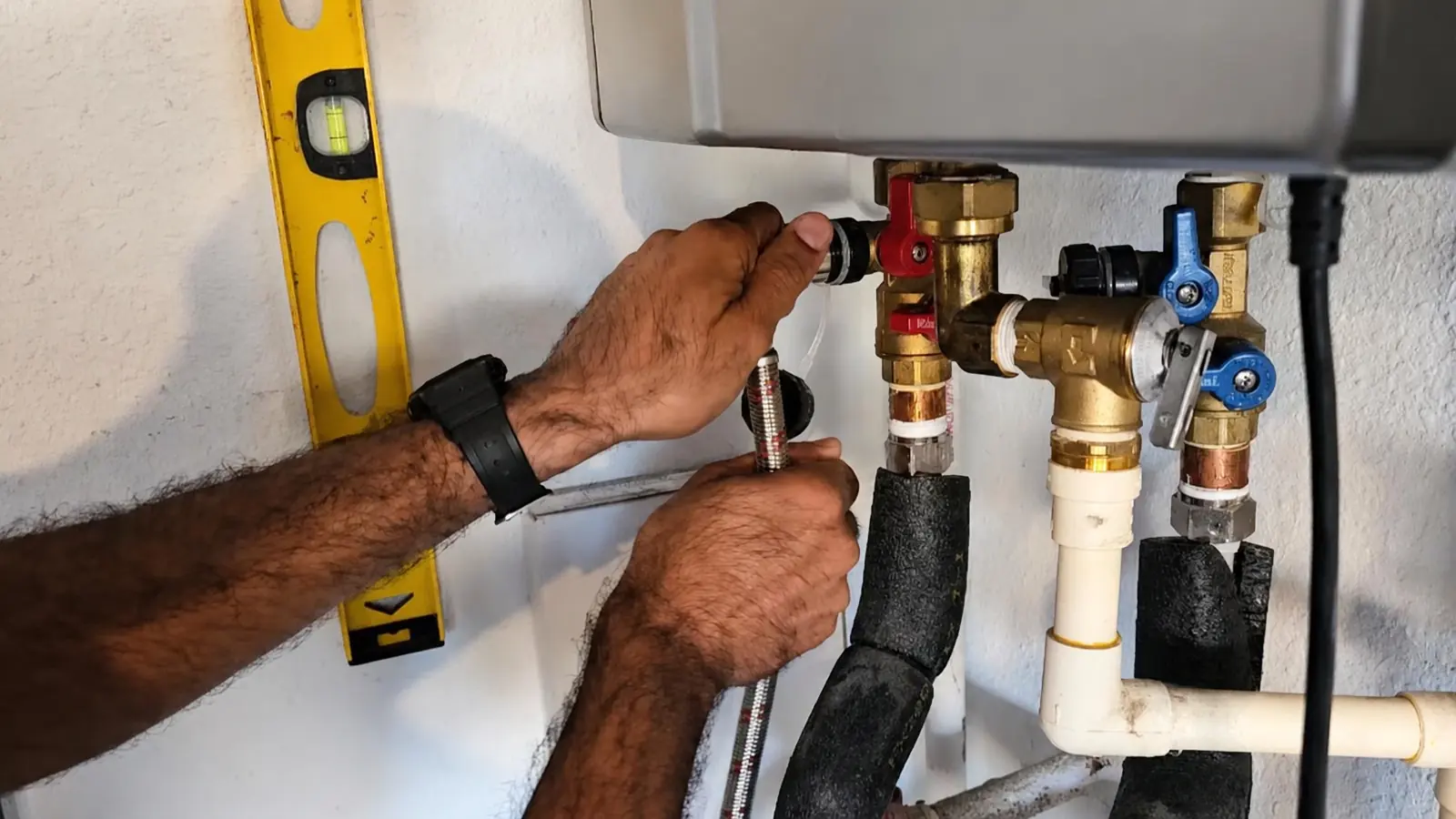
Two meanings of hybrid
Manufacturers use hybrid for two different products. One is a heat pump water heater, which pairs a storage tank with a heat pump that pulls heat from the surrounding air. The other is a unit that combines a small tank with tankless-style burners, so there is a ready supply plus on-demand heating.
They solve different problems. A heat pump hybrid lowers electric use. A tank-plus-tankless hybrid adds a small reserve to a fast-heating burner. Knowing which one a listing means saves a lot of confusion.
How each type works
Here is how the two kinds compare against a plain tank and a plain tankless unit.
| Type | How it heats | Best fit | Watch for |
|---|---|---|---|
| Standard tank | Burner or elements heat stored water | Simple, lowest purchase price | Standby loss. |
| Tankless | Heats water as it flows | Small spaces, long showers | Gas line and venting upgrades. |
| Heat pump hybrid | Heat pump plus backup elements | Electric homes with space | Needs space, air and drain. |
| Tank plus tankless hybrid | Small tank plus fast burner | Gas homes with steady demand | Higher cost, parts. |
What matters in a cold-winter house
Winter groundwater in northeastern Connecticut is cold, so any unit that heats water on demand has to raise the temperature a long way. A tankless unit sized for a mild climate can run out of capacity in January.
A heat pump hybrid pulls heat from the air in the room, which means it cools the space and needs enough volume and warmth around it. In a cold unheated basement, it works less well. Where it is placed matters as much as which model you pick.
Water quality matters if you are on a well
Hybrid and tankless units have narrow passages that scale and sediment can clog. If your home is on a private well, the Connecticut Department of Public Health advises testing the basic indicators yearly, including hardness and sediment-related measures, and retesting after pump or pipe work.
A recent water test helps us choose a unit and a flush schedule. See our tankless water heater page for what maintenance involves.
According to the same Department of Public Health guidance, a well should be retested after pump or pipe work.
Not sure which fits?
Call and tell us your fuel, space and household size.
Sizing and installation needs
Gas tankless and hybrid units may need a larger gas line and new venting. Heat pump units need a condensate drain and clear air space. Electric tankless units need a large circuit, sometimes more than the panel can offer.
We check the existing gas line, panel and space before recommending any unit. If it does not fit, a standard tank is often the right answer, and our installation page covers that route.
Running costs and upkeep
Heat pump and tankless units use less energy than a conventional tank in the right setting. They also cost more up front and need maintenance. Tankless units need yearly flushing. Heat pump units need air filters cleaned and the condensate drain kept clear.
Savings depend on your fuel prices, your usage and the unit location. We do not promise a number, and any seller who does is guessing. Ask for the running-cost assumptions behind any claim.
Questions to ask before you buy
A short list of questions saves money. Ask what the unit needs in terms of gas line size, electrical service, venting and drain. Ask how much clear space it requires and what it will do to the temperature of the room.
Ask about the maintenance schedule, the warranty terms and who services the model in this area. A hard-to-service brand can leave you waiting for a part. Ask for the running-cost assumptions behind any savings claim, and compare them to your own fuel bills.
Who each type tends to suit
A small household in a gas home with a good vent path often does well with a tankless unit. A larger family that runs several showers back to back may prefer a tank with a good recovery rate or a hybrid with a reserve.
A heat pump hybrid fits an electric home with a roomy, warm utility space and a nearby drain. Tell us how many people live in the house and when the hot water peaks, and we can steer you toward the type that fits.
How to choose
Start with your fuel and your space. Gas homes with a good vent path can choose among tankless, standard or tank-plus-tankless hybrids. Electric homes with a roomy utility space may do well with a heat pump hybrid. Small homes with limited space lean toward tankless.
Then look at your household. A big family with many showers needs capacity and a reserve. We help you work through that on a call or visit, and we install in Windham and Mansfield.
Windham hybrid water heater questions
What is a hybrid water heater?
The term covers heat pump water heaters and units that combine a small tank with a tankless burner. Check which one a seller means.
Does a heat pump water heater work in a cold basement?
It works less efficiently in a cold space and cools the room as it runs. Placement matters.
Do hybrid units need maintenance?
Yes. Tankless parts need flushing, and heat pump units need clean filters and a clear drain.
Can I replace a tank with a hybrid unit?
Sometimes. Venting, gas, electrical and space all have to fit. We check before quoting.
Is a hybrid worth it in Windham?
It depends on fuel, space and usage. We help compare options for your house.
Weighing your options?
Call and we will talk through sizing, venting and fuel before you buy.
Call (860) 397-8103