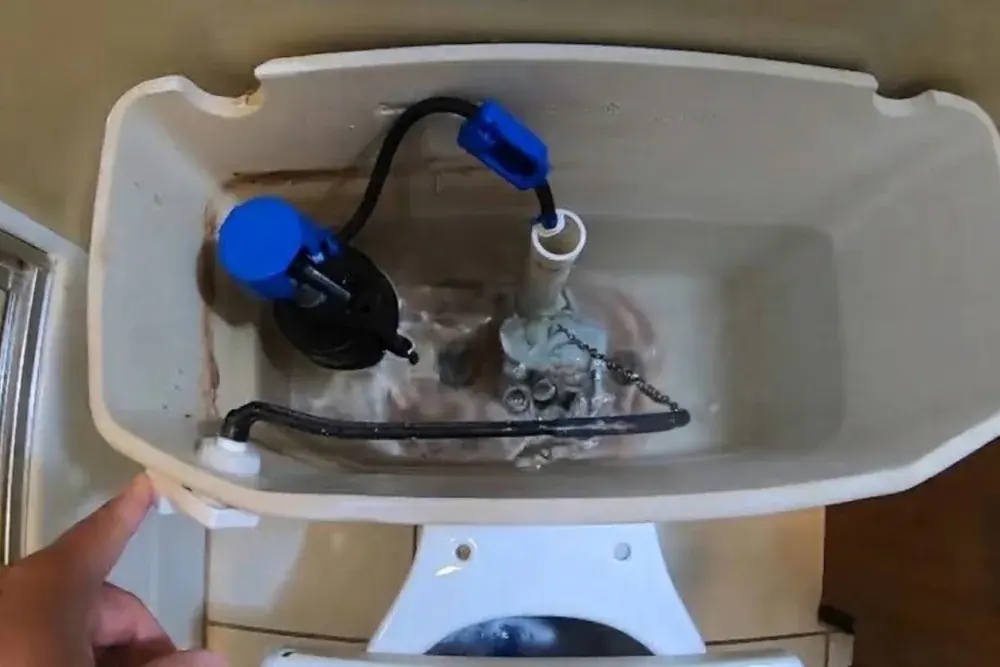
What the fill valve does
The fill valve sits on the left side inside the toilet tank. When you flush, the water level drops and the valve opens to refill the tank and send a little water down the overflow tube to refill the bowl. When the float rises to the set level, the valve shuts the water off.
Most valves have a float, a seal and a shaft. Over time, the seal hardens, the float sticks and debris lodges in the valve. Any of those can leave the valve partly open.
Signs the fill valve is failing
The toilet gives plenty of clues. A fill valve fault usually shows up in a few ways.
Hissing after the tank is full
The seal is letting water past even when the float is up.
Tank refills slowly
Debris is clogging the valve or the supply line.
Water running into the overflow tube
The water level is set too high or the valve will not shut off.
Phantom flushes
Water leaking from tank to bowl makes the valve refill every few minutes.
Hard water, wells and fill valves in eastern Connecticut
Fill valves are small plastic parts, and mineral buildup and sediment shorten their life. If your home is on a private well, the Connecticut Department of Public Health recommends testing basic water quality indicators every year, including hardness, iron and turbidity. Those same minerals and sediment can foul a fill valve.
If your valve fails often, a water test tells you whether the water or the part is the problem. Our toilet repair service can swap the valve and look at the rest of the tank in one visit.
According to the Connecticut Department of Public Health, a well should also be retested after pump or pipe repairs.
Flapper or fill valve: how to tell which
These two parts get blamed for each other. A flapper leaks water from the tank into the bowl. A fill valve lets water keep entering the tank. The test is simple.
Put a few drops of food coloring in the tank and wait fifteen minutes without flushing. If color shows in the bowl, the flapper is leaking. If the tank water is rising to the overflow tube and spilling, the fill valve is not shutting off.
| What you see | Likely part | Quick check |
|---|---|---|
| Color in the bowl without flushing | Flapper | Dye test. |
| Water running down the overflow tube | Fill valve or float setting | Lower the float and watch. |
| Slow refill after flushing | Fill valve or supply | Open the shutoff fully. |
| Hissing that stops when you lift the float | Fill valve seal | Replace the valve. |
Not sure which part it is?
Call and describe what you see. We can usually narrow it down on the phone.
How a fill valve is replaced
Replacement is a job many homeowners can do, but the steps matter. Close the shutoff valve behind the toilet, flush to empty the tank and sponge out the remaining water. Disconnect the supply line from the bottom of the valve and remove the locknut under the tank.
Lift out the old valve, drop in the new one at the same height and tighten the locknut by hand, then a quarter turn more. Reconnect the supply line, attach the refill tube to the overflow pipe and turn the water on slowly. Watch for leaks at the nut and adjust the float so the water stops about an inch below the top of the overflow tube.
Mistakes that cause new leaks
Overtightening is the common one. Plastic tank hardware cracks if you crank it, and a cracked tank means a new toilet. Another is skipping the washer under the tank and the one inside, which leaves a slow drip you only notice when the floor warps.
Use new parts and hand-tighten. If the tank bolts or the shutoff valve are corroded, replace those before you replace the valve. Our faucet and fixture page explains how we handle shutoff valves that will not close.
Types of fill valves you may find in the tank
Older toilets often use a ballcock, a brass valve with a float ball on a long arm. Newer toilets use a plastic float-cup valve that slides up and down a vertical shaft, or a diaphragm style with a small float that sits beside the valve body.
All of them do the same job, and most replacement valves are adjustable to fit different tank heights. Measure from the bottom of the tank to the top of the overflow tube so the new valve ends up at the right height.
| Style | How it looks | Common issue |
|---|---|---|
| Ballcock | Brass body with a ball on a rod | Corroded arm, worn washer. |
| Float cup | Plastic shaft with a cup that rides up and down | Debris under the seal. |
| Diaphragm | Short body with a side float | Hardened diaphragm. |
| Pressure-assist tank | Sealed inner tank | Not a homeowner repair. |
When to call a plumber instead
Call if the shutoff valve will not close, if the toilet base leaks, if water stains appear under the bathroom or if you have tried a new fill valve and the problem remains. Those signs point to a larger fault.
We also recommend a call if the toilet is old enough that parts are hard to find. In that case, a new toilet may be a better value than another repair. For work in Mansfield rentals or multiple units, we can fix several toilets in one visit.
Windham toilet fill valve questions
Can a bad fill valve raise my water bill in Windham?
Yes. A valve that leaks into the overflow tube can waste many gallons a day. If your meter moves with everything off, check the toilets first.
How do I know if my fill valve is the problem?
Look for hissing after the tank is full, a slow refill or water running into the overflow tube. Lifting the float should stop the noise if the valve is at fault.
Should I replace the flapper at the same time?
Usually yes. They wear at the same rate, and replacing both is cheaper than a second visit.
Does well water wear out fill valves faster?
Sediment and minerals can shorten the life of the seal. A water test helps if you are replacing valves often.
How long does a replacement take?
Many are done in under an hour once the new valve is on hand.
Toilet still running after you tried a fix?
Call us and we will sort out whether it is the valve, the flapper or something deeper.
Call (860) 397-8103