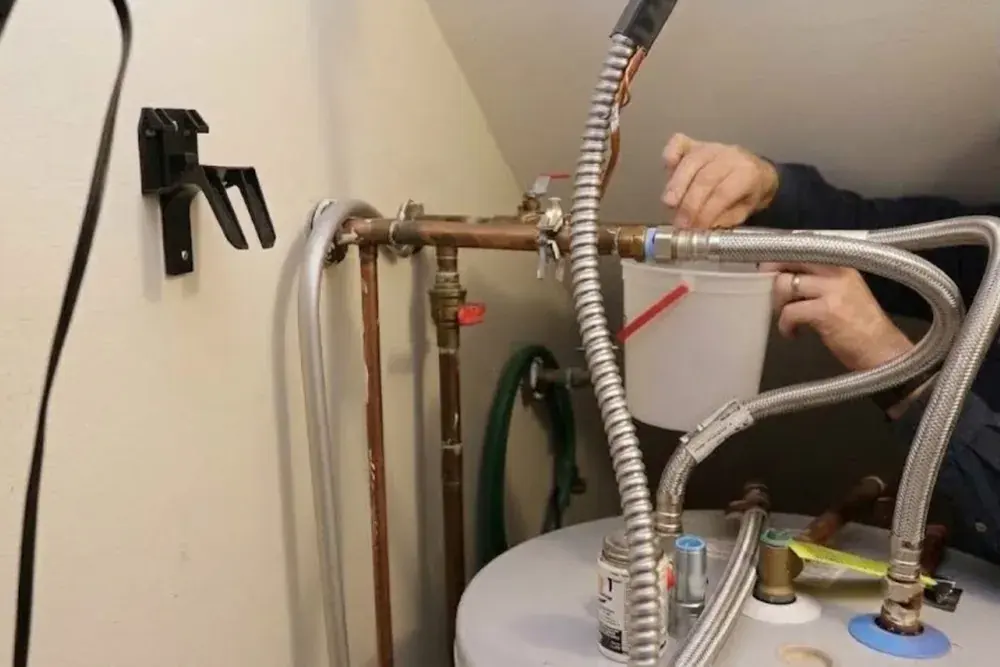
What a thermocouple does
A thermocouple is a safety sensor. It sits in the pilot flame and produces a tiny electrical current when hot. That current holds the gas valve open. If the pilot goes out, the current stops, the valve closes and gas stops flowing to the burner.
When the thermocouple wears out, it can no longer hold the valve open even with a good flame. The pilot lights while you hold the button and dies when you let go. That is the classic sign.
Signs the thermocouple is failing
A few patterns point to the part rather than the heater as a whole.
Pilot lights but goes out when released
The thermocouple is not producing enough current.
Pilot goes out after hours or days
The thermocouple is weak, or a draft blows out the flame.
Yellow or lazy pilot flame
Dirt or a blocked pilot tube, not always the thermocouple.
Black soot at the tip
A dirty or poorly burning pilot that needs cleaning.
If you smell gas, leave first
If you smell gas near your heater, do not try to relight it. Leave the building, then call 911 or your gas utility from outside. Connecticut's Public Utilities Regulatory Authority publishes a list of gas utility phone numbers, and it is worth saving yours in your phone before you need it.
Once the gas utility clears the house, our water heater repair service can find the cause.
According to PURA, the state regulator for gas utilities, those phone numbers are listed on its website.
Checking before you replace
Look at the flame first. A healthy pilot is steady and blue and wraps the tip of the thermocouple. If the flame is weak or lazy, clean the pilot orifice before blaming the part.
Check the draft. A back-draft from a poorly vented flue can blow out the pilot, and a new thermocouple will not fix that. If the burner area is rusted or sooty, stop and call a plumber, because that points to venting or combustion problems.
| What you see | Likely cause | Do this |
|---|---|---|
| Pilot stays lit while button held only | Worn thermocouple | Replace the thermocouple. |
| Weak yellow pilot | Dirty pilot orifice | Clean the pilot tube. |
| Pilot blows out in wind or when a fan runs | Draft or venting problem | Call a plumber. |
| Smell of gas | Possible leak | Leave and call the gas utility. |
Pilot light keeps failing?
Call and we will check the whole burner assembly, not just the part.
How a thermocouple replacement works
This is a modest repair on many tank heaters, but only if you are comfortable around gas. Turn the gas control to off and wait several minutes. Remove the burner access panel, disconnect the thermocouple from the gas valve and release it from the pilot bracket.
Fit the new part in the same position, snug the connection by hand and a quarter turn with a wrench, and relight the pilot following the label on the heater. Check the flame, and test for gas smell at the connection with a soap solution rather than a flame.
Limits of do-it-yourself on gas appliances
A thermocouple is a small part, but the system around it is a gas appliance. If the burner flame is ragged, if the flue is rusted or if the pilot keeps blowing out, the problem is not the part. Gas work needs care and the right tools.
If you are unsure, call. We check the gas valve, the burner, the flue draft and the relief valve as part of every gas repair. If your heater shares a flue with a boiler, we check that too.
Thermocouple, thermopile and flame sensor
Different gas heaters use different safety devices. A thermocouple is the common one on a standing-pilot tank. A thermopile is a related part that makes more current and may run the gas valve. A flame sensor is used on heaters with electronic ignition.
The label on the heater and the model number tell you which one you have. Buying the wrong part wastes a trip, so match the part to the model before you start.
| Heater type | Typical part | Common symptom |
|---|---|---|
| Standing pilot | Thermocouple | Pilot dies when button released. |
| Millivolt system | Thermopile | Weak or no response from the valve. |
| Electronic ignition | Flame sensor and igniter | Clicks, lights, then shuts down. |
| Newer sealed-combustion unit | Sensor and control board | Error code on the display. |
Repair or replace the whole heater
A new thermocouple costs little, but the heater around it may be near the end of its life. If the tank is rusted, leaks or is over a dozen years old, put the part money toward a replacement. A scaled tank loses efficiency and may fail soon.
We tell you honestly which makes sense. Our replacement page explains how we size and install.
Windham thermocouple and gas heater questions
Why does my pilot light keep going out?
A worn thermocouple, a dirty pilot or a draft in the flue can all cause it. Watching the flame helps narrow it down.
Can I replace a thermocouple myself?
Many people do, but gas work needs care. If you smell gas or are unsure, call a plumber.
How long does a thermocouple last?
It varies. Heat and soot wear it down, and many last years before failing.
What do I do if I smell gas?
Leave the building, then call 911 or your gas utility from outside. Do not light flames or switch anything on or off.
Is a gas water heater safe to relight after the pilot goes out?
Yes, if there is no gas smell and you follow the label. If it goes out repeatedly, have it checked.
Pilot light out and cold showers?
Call and we will diagnose the heater and fix it properly.
Call (860) 397-8103