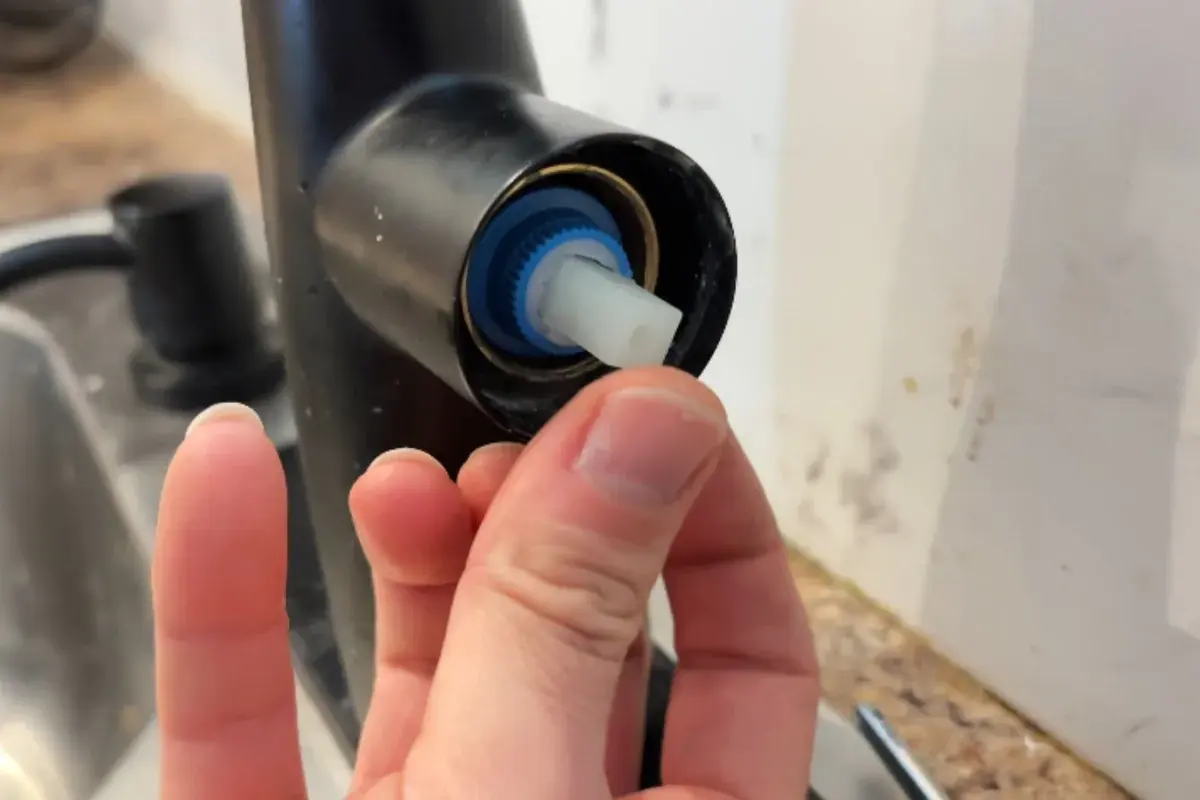
How a single-handle shower valve works
A single-handle valve uses one cartridge or ball that slides or rotates to mix hot and cold water. Turning the handle sideways changes the temperature, and pulling or pushing it changes the flow.
Rubber seals inside the cartridge make a tight fit. With age, they harden, wear and trap mineral grit, and the cartridge can no longer seal. That is when the shower drips from the head or the tub spout.
What the symptoms tell you
Where the water appears tells you where the fault is.
Drips from the showerhead after shutoff
The cartridge is not sealing.
Water leaks around the handle
A worn O-ring or loose packing at the stem.
Temperature will not stay steady
Worn seals or a failing pressure-balancing spool.
Low flow at the head
Mineral scale in the cartridge or the showerhead.
Finding your valve brand
You need the right cartridge, and cartridges are specific to the brand and model. Look at the handle and the trim plate for a logo. If there is none, pull the handle and plate and look at the cartridge itself.
A photo of the cartridge at a plumbing supply counter can identify it. We bring common cartridges on the truck, but older or specialty valves may need ordering.
| Item | Why it matters |
|---|---|
| Shutoff for the shower | Some showers have stops, many do not and need the main off. |
| Valve brand and model | Cartridges are not interchangeable. |
| Wall access | In-wall valves may need an access panel. |
| Spare parts | Seals and O-rings are cheap to replace together. |
Old valves and local code
The 2022 Connecticut State Building Code, effective October 1, 2022, adopts the 2021 International Plumbing Code (IPC). For showers, the plumbing code covers the temperature-limiting and pressure-balancing valves that protect against scalding when another fixture runs.
If your valve is old and not of that type, a replacement may be worth considering. Our faucet and valve repair service can check what you have and what the code expects for new work.
Not sure which cartridge?
Call and send us a photo description. We will tell you what we need.
Cartridge replacement steps
Turn off the water supply to the shower. Remove the handle, usually with a set screw, and the trim plate. Take off the retaining clip or nut that holds the cartridge and pull the cartridge straight out with pliers or a puller.
Fit the new cartridge in the same orientation, secure the clip, replace the trim and handle and turn the water on. Check for drips at the head and around the handle. Note the position of the old cartridge before removal, since some are keyed for hot and cold.
When the valve body is the problem
Sometimes the valve body is corroded or cracked and a new cartridge will not seal. That means opening the wall to replace the whole valve, which is a bigger job and may involve tile.
We tell you before we open anything. If the valve is old and the wall is open for another reason, replacing it then costs less than doing it twice. For related work, see our installation page.
Balanced and thermostatic valves
Many single-handle shower valves use a pressure-balancing cartridge that keeps the temperature steady when another fixture runs. Some use a thermostatic cartridge that senses the temperature directly. Both cost more than a basic mixing valve and are worth keeping.
If your shower swings hot or cold when the toilet flushes, the cartridge may be worn or the valve may be a basic type. A new balancing cartridge often fixes it. If the valve is an old style with no balancing, replacing it is an upgrade worth discussing.
Hard water and cartridges
Mineral grit shortens the life of cartridge seals. If your cartridge fails in a year or two, hard water or sediment may be the cause. A whole-house filter or a softener helps, and a well owner may need a water test first.
When you remove the old cartridge, look for white or brown crust on the seat. Clean it gently so the new seal can sit flat, and avoid scratching the brass.
When to call a plumber
Call if the shutoff will not close, if the cartridge is stuck, if you see water inside the wall or if the repair did not stop the drip. Also call if the valve is in a hard-to-reach spot or behind finished tile.
We handle shower and tub valves in Windham and Coventry, and we can fix several in one trip for landlords with multiple units.
Windham shower faucet questions
Why does my shower drip after I turn it off?
The cartridge seals are worn or have mineral grit in them. A new cartridge usually fixes it.
Do I need to shut off the whole house to fix it?
Some showers have stops, but many do not. Shutting off the main is safest if you cannot find a stop.
Can I use a universal cartridge?
Cartridges are brand and model specific. Match the part to your valve.
What if the handle will not come off?
It may be corroded or stuck. Do not force it, because you can break the stem. A plumber has tools to remove it safely.
How long does a shower valve repair take?
A cartridge swap is often under an hour. A valve body replacement takes longer.
Shower valve leaking in the wall?
Call and we will identify the valve and bring the right cartridge.
Call (860) 397-8103